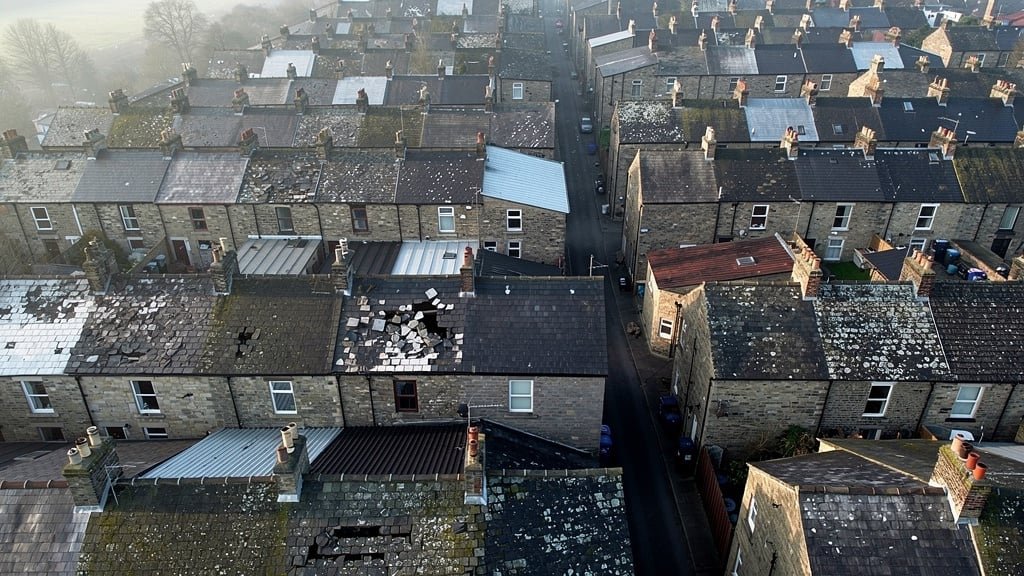
The roof is probably the single most important element of any property. It's the first line of defence against the elements — and in West Yorkshire, where annual rainfall is substantial, having a sound roof is absolutely critical. Yet roof problems are consistently among the most common — and most costly — findings in surveys carried out by Bradford Shipley Surveyors.
Why Roof Assessment is Critical in West Yorkshire
West Yorkshire receives significantly above-average annual rainfall — typically 700–1,000mm per year in the lowland areas, significantly more on higher ground. Properties are also exposed to strong prevailing winds from the west and south-west. For older properties with ageing roof coverings, this combination creates real risk of water ingress.
The majority of properties across Bradford, Shipley, Bingley, and Keighley have slated roofs — typically Welsh slate, which is excellent material when in good condition, but which has a finite lifespan. Many of the terraced properties that dominate the local market have roofs that were originally laid in the Victorian era and have been partially repaired — but never fully replaced — since then.
Nail Failure: The Silent Roof Problem
The most common roof problem we find in Bradford and Shipley properties is nail failure — the gradual corrosion of the iron nails used to fix slates to the roof battens. When nails corrode, slates begin to slip, slide, and eventually fall. The problem typically starts in isolated areas and spreads across the roof over time.
Here's the key thing about nail failure: from street level, a roof with early-stage nail failure looks relatively normal. You might see one or two slipped or broken slates, but nothing that obviously says "major problem." The true extent of nail failure is only visible from inside the roof void — which is one of the places our surveyors always inspect during a Level 3 Building Survey.
When nail failure is extensive and widespread, the only viable long-term solution is a complete re-roof. On a typical Bradford terrace, this costs between £6,000 and £15,000 depending on the size and pitch of the roof and the choice of replacement covering.
Defective Flashings
Flashings are the metal strips — usually lead — used to seal the junction between the roof covering and vertical surfaces: chimney stacks, parapet walls, dormer windows, and valley gutters. When flashings fail, water penetrates at these junctions and enters the building.
Failed flashings are extremely common in older properties. Lead has a limited lifespan and weathers over time; it can also be damaged by thermal movement, frost, and physical impact. Symptoms include damp around chimney breasts inside the property, and staining on masonry below the flashing line externally.
Chimney Stack Problems
Most Victorian and Edwardian properties in Bradford and Shipley have one or more chimney stacks. These are major sources of water ingress when they fall into disrepair. Common chimney issues include:
- Eroded and open mortar joints in the brickwork or stonework
- Defective lead flashings at the base of the stack
- Damaged or missing chimney pot
- Open flue tops on unused chimneys allowing rainwater to enter
- Structural movement of the chimney stack relative to the main roof structure
Hidden Water Damage in the Roof Void
When a roof has been leaking for a period — even a relatively short time — the water ingress can cause significant secondary damage inside the roof void. This includes:
- Rot in roof timbers (rafters, purlins, ridge board)
- Wet rot and dry rot in timbers adjacent to chimney stacks and valleys
- Staining and damage to ceiling plaster
- Mould growth on sarking felt and roof structure
None of this is visible from outside the property. Access to the roof void — via a loft hatch — is essential for a thorough assessment, which is why our Level 3 surveys always include inspection of the roof space where accessible.
Concerned about the roof of a property you're buying?
A Level 3 Building Survey from Bradford Shipley Surveyors includes a thorough roof inspection from inside and outside the building.
Get a Free Quote